

How Long Does It Take to Memorize One Juz
Of all the questions parents ask when their child starts hifz, this might be the most common one: how long until they finish a single juz? It's a fair question, and also a slippery one, because the honest answer is "it depends" wrapped around a lot of real variables. Still, parents deserve more than a shrug. Below is a milestone by milestone look at what completing one juz actually involves, how long each stage tends to take for a typical student, and the factors that speed things up or slow them down.
A juz is one of thirty roughly equal portions of the Quran, each averaging around twenty pages depending on the print edition. Committing an entire juz to memory, in a way that holds up under review weeks and months later, is a serious undertaking, not a weekend project. Understanding the stages ahead of time helps families set a pace that's sustainable rather than one that burns a child out in the first month.
Milestone One: The First Two Weeks, Establishing the Habit
Before any serious memorization volume happens, the first two weeks are typically about building the daily habit itself. A child (or adult) new to hifz needs to get used to the rhythm of listening to a passage, repeating it, and reciting it back, often for the first time in a structured way. During this stage, actual new memorization might be limited to a few lines a day, sometimes less, because the real work is training focus and repetition tolerance rather than racing through content.
Parents sometimes get discouraged here because progress looks slow on paper. It's worth remembering that a strong foundation in these early sessions, rather than rushed volume, tends to pay off later in how well the material sticks.
Milestone Two: Weeks Three Through Eight, Finding a Sustainable Pace
By the second month, most students settle into a workable rhythm, typically memorizing somewhere between a half page and a full page of new material per day, five or six days a week, depending on age and the length of daily sessions. At this pace, a student memorizing half a page a day would need roughly forty days of active memorization to cover a twenty page juz, though this doesn't yet account for review time, off days, and the natural dips in momentum that happen over any two month stretch.
A student memorizing a full page a day, which is a strong pace usually reserved for older children or dedicated hifz-track students with multiple daily sessions, could theoretically finish new memorization of a juz in around twenty days. In practice, almost no one maintains a perfectly linear pace, so real timelines run longer than the math suggests.
Milestone Three: Building in Review, Not Just New Memorization
This is the milestone that catches most families off guard. Memorizing new lines is only half the job. Each newly memorized portion needs to be reviewed repeatedly, both in the days immediately after it's learned and then periodically for weeks afterward, or it fades. A realistic daily session for an active hifz student usually splits time between new memorization and review of previously memorized material, meaning the "new content" pace slows down once review of earlier pages is folded into the daily routine.
For a typical student learning at half a page a day with proper review built in, completing one full juz with the memorization solid enough to recite reliably weeks later often takes two and a half to four months, not the six weeks the raw math might suggest.
Milestone Four: The Consolidation Recitation
Once all twenty or so pages of a juz have been memorized at least once, most programs move into a consolidation phase, where the student recites larger chunks, sometimes several pages at a stretch, in front of the teacher without prompting. This stage exposes weak spots that didn't show up when pages were tested individually, verses that get confused with similar wording elsewhere in the juz, or transitions between pages that trip the student up.
This consolidation phase typically takes another two to four weeks on its own, since fixing these weak spots requires targeted repetition rather than simply moving forward with new content.
Milestone Five: Long Term Retention Review
A juz isn't really "done" the day a student first recites it start to finish without mistakes. Long term retention depends on continued review well after that first clean recitation, often for months, sometimes woven into review of other juz as more memorization is added on top. Programs that build in structured, ongoing review of previously completed juz tend to produce students whose memorization holds up for years, rather than students who can recite a juz once and then lose most of it within a year from lack of upkeep.
Putting the Milestones Together: A Realistic Range

Adding up these stages, most steady, consistent students complete their first juz somewhere between three and six months, factoring in initial habit building, active memorization, integrated review, and consolidation. Younger children just starting out often land toward the longer end of that range for their very first juz, since they're also still building basic reading fluency and lesson stamina alongside the memorization itself. Students who already read fluently, have some memorization experience, and commit to daily sessions with minimal interruption often land toward the shorter end.
It's worth being honest that some students take considerably longer than six months for a first juz, and that isn't a sign of failure. Life happens, school workloads shift, motivation dips, and a five or six month plan can stretch into eight or nine months without anything having gone wrong. What matters more than hitting a specific timeline is that the memorization, once achieved, is solid and retained rather than rushed and forgotten.
Factors That Speed Things Up
A few things reliably shorten the timeline. Consistency matters more than almost anything else, a student who shows up for short daily sessions six days a week will typically outpace a student doing longer, less frequent sessions with gaps of several days between them, because memory retention depends heavily on regular, spaced repetition rather than occasional cramming.
Strong reading fluency before starting also speeds things up considerably, since a student who can already read the target passage smoothly spends less lesson time decoding unfamiliar words and more time actually committing the passage to memory. Working with a dedicated one-on-one teacher, rather than a large group class where individual attention is limited, also tends to accelerate progress, since the teacher can catch small mistakes immediately before they become memorized errors that are much harder to unlearn later.
Choosing a juz with more short, familiar surahs, such as the thirtieth juz which contains many of the shorter chapters typically taught earliest, can also move faster than one of the longer, more continuous juz found in the middle of the Quran, simply because shorter surahs offer more natural stopping and review points.
Factors That Slow Things Down
Inconsistent attendance is probably the single biggest factor that extends timelines. A student who misses several sessions a month, or who goes through long stretches of irregular practice, ends up spending a disproportionate amount of lesson time re-covering ground that had already faded, rather than moving forward with new material.
Trying to move too fast without adequate review also backfires. A student who is pushed to add new pages daily without solid review of earlier ones may appear to be progressing quickly on paper, but often ends up with fragile memorization that collapses under testing weeks later, requiring the whole section to be relearned, which costs far more time in the long run than a slower, steadier pace would have.
Splitting attention across too many competing demands, heavy school workloads, multiple extracurriculars, and inconsistent sleep schedules, particularly affects younger children's ability to hold new memorization in working memory long enough for it to transfer into long term retention.
How Age Affects the Timeline
A five or six year old memorizing their first juz, usually the thirtieth juz with its shorter surahs, often needs closer to the longer end of the range, sometimes stretching past six months, simply because attention spans are shorter and sessions have to stay brief to avoid frustration. That isn't a reflection of ability, it's a normal feature of working with a young child's developing focus and working memory.
Children between roughly eight and twelve tend to show the most consistent, predictable progress, since they've usually developed enough reading fluency to work somewhat independently between lessons, while still having the flexible memory that makes rote repetition relatively easy. This age range often completes a first juz closer to the three to four month mark when sessions are consistent.
Teenagers and adults bring a different set of strengths and challenges. They can usually grasp instructions and self-correct faster than a young child, which helps efficiency, but they're also juggling school, work, or other responsibilities that can make consistent daily practice harder to protect. An adult who can genuinely commit to daily sessions often progresses quickly, while an adult squeezing in practice around a full schedule may find the timeline stretching out despite strong underlying ability.
A Sample Weekly Breakdown
To make the pacing more concrete, consider a student memorizing half a page of new material most days, with review folded in. A typical week might look like this: on the first two days of the week, the student learns a new quarter to half page, repeating each line multiple times until it can be recited without looking, then reviews it once more before the lesson ends. On the third and fourth days, roughly half the session is spent reviewing everything memorized in the past ten days, while the other half continues with new material at a slightly reduced pace to make room for that review. The fifth day is often lighter, focused mostly on consolidating the week's new content into a single smooth recitation, catching any spots where two similar verses have started to blend together in the student's memory.
Multiply a week like that across twelve to sixteen weeks, and a full juz becomes a realistic, achievable target without the student ever feeling like they're sprinting through unfamiliar material without a chance to catch their breath.
When Progress Looks Slower Than Expected
It's worth naming directly that a lot of families compare their child's pace to some idealized number they heard somewhere, a cousin who finished a juz in six weeks, or a story shared at the mosque about a particularly fast learner. These comparisons rarely account for how many hours per week that other child was actually studying, how much prior reading fluency they had, or how thorough their review process actually was. A slower, steadier pace that produces memorization a student can still recite accurately a year later is worth far more than a fast pace that has to be relearned from scratch after a few months of fading.
If your child's pace feels slower than you expected, the more useful question isn't "why aren't we finishing faster," it's "is what we've memorized so far still solid when tested." If the answer is yes, the pace is probably fine even if it doesn't match someone else's timeline.
What This Looks Like Practically, Week by Week
For families who want a concrete sense of pacing, a workable structure for a motivated child in online Quran memorization classes for kids might look like this: two or three lessons a week with a teacher, each around thirty to forty five minutes, plus short daily practice sessions at home of ten to fifteen minutes to reinforce what was covered in the lesson. New memorization might total half a page to a full page across a week, with roughly equal time devoted to reviewing the previous two or three weeks of material during lessons.
Over a dozen or so weeks following this rhythm, a juz of about twenty pages becomes a realistic target, assuming reasonably consistent attendance and home practice. Families aiming for a faster pace sometimes add a fourth or fifth weekly session, though this only helps if the student can genuinely absorb the added volume rather than simply cramming more content into the same limited attention span.
Group Classes Versus One-on-One for Memorization Pace
The format of instruction also shapes how long a juz takes. In a group class, the pace is often set by the slowest or most cautious student in the room, since the teacher can't move forward until most of the group has a passage reasonably solid, which can mean stronger students are held back and struggling students feel rushed. In a one-on-one setting, the pace is set entirely by the individual student's actual retention, which usually means faster students move faster and students who need more repetition get it without feeling like they're falling behind a group.
This is one of the more practical reasons families choose individual instruction specifically for memorization, even if they're comfortable with group settings for general Quran reading or Arabic lessons. Memorization pacing is simply harder to standardize across a group than reading instruction is, since retention varies so much from one student to the next.
Keeping Motivation Steady Over a Multi-Month Project
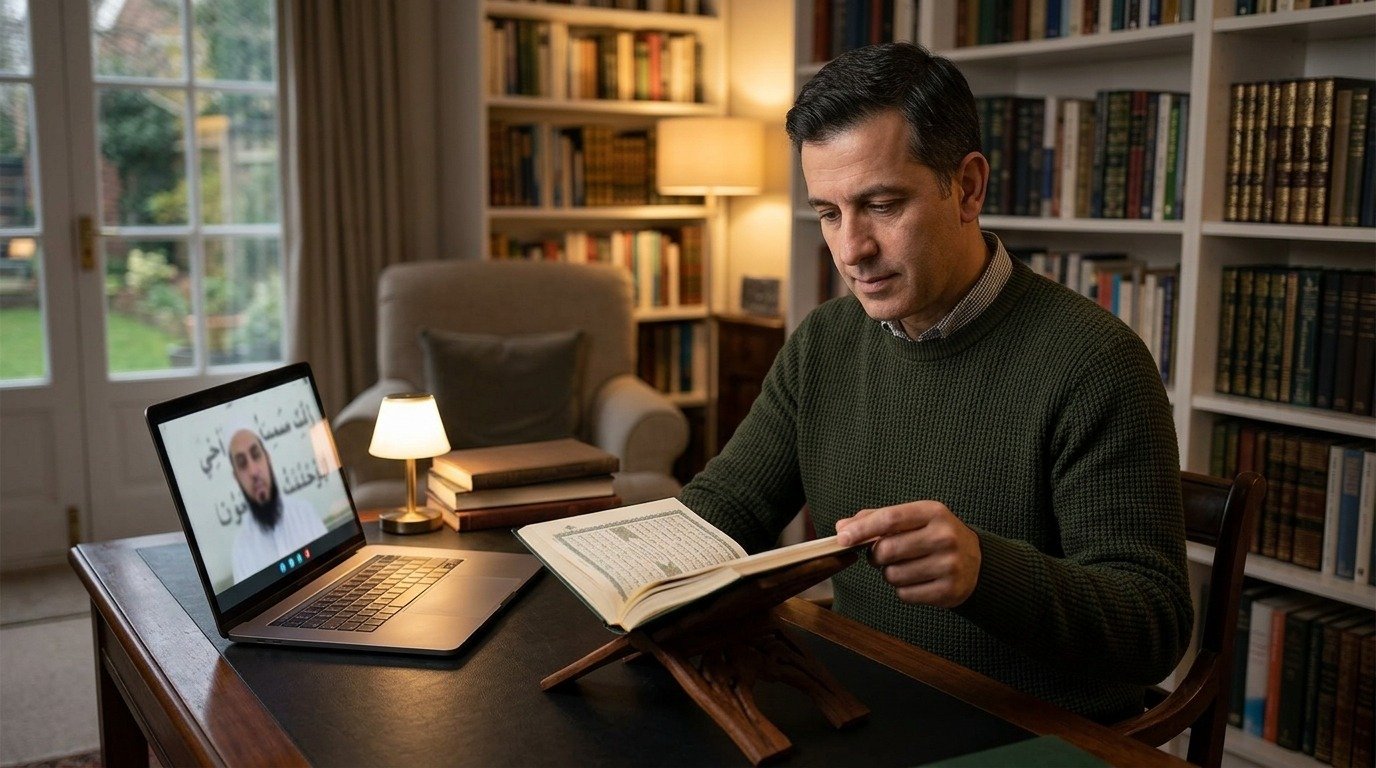
A juz is a long enough undertaking that motivation naturally dips partway through, usually somewhere in the middle once the initial excitement has worn off and the finish line still feels far away. Breaking the juz into smaller visible milestones, such as celebrating every five pages completed rather than waiting for the whole juz to be done, helps keep a child's sense of progress alive during that middle stretch. Some families mark milestones with something small and meaningful, a favorite meal, a phone call to a grandparent to recite what's been learned so far, or simply consistent verbal encouragement from parents who are paying attention to the effort, not just the final result.
Teachers who work with children regularly usually build in these smaller milestones as a matter of course, since sustained motivation across three to six months is genuinely difficult for a child to manage without some structure supporting it along the way.
Setting Expectations With Your Child's Teacher
Rather than fixating on a fixed timeline, it's usually more productive to have an honest conversation with your child's teacher about pacing that fits your child specifically. A good teacher will be able to tell you, after a few weeks of working together, roughly how many lines or pages your child can reliably absorb and retain per week, and can adjust the plan from there rather than forcing a generic schedule onto a child who needs more time, or holding back a child who's ready to move faster.
It also helps to ask how the teacher structures review specifically, since this is the part of hifz that's easiest to shortchange under time pressure but most important for the memorization to actually last. A program built around online Quran memorization classes should be able to describe a clear review system, not just a plan for adding new content.
Beyond the First Juz
Once a first juz is genuinely solid, later juz often move somewhat faster, not because the material gets easier, but because the student has built memorization habits, familiarity with the review process, and stronger reading fluency along the way. Many families use the completion of the first juz as a natural point to reassess pacing and decide whether to maintain the same schedule, increase session frequency, or set sights on a longer term goal such as pursuing an online ijazah once a meaningful portion of the Quran has been memorized and reviewed to a reliable standard.
Families in Los Angeles and elsewhere who have gone through this process often say the biggest adjustment isn't the memorization itself, it's recalibrating expectations around pace once they see firsthand how much review matters compared to raw new content. If you're just getting started and want a realistic assessment of what pace makes sense for your own child, reaching out through contact to speak with a teacher directly, rather than guessing from general timelines, is usually the most useful next step.
A Few Realistic Examples
To make this less abstract, consider three different students. The first is a six year old just starting out, attending two twenty minute lessons a week with light daily review at home. This child might take seven or eight months to complete the thirtieth juz, and that pace is entirely normal for the age.
The second is a ten year old with two years of prior Quran reading experience, attending three thirty minute lessons a week with consistent ten minute home practice most days. This child might complete a middle juz in around four months, benefiting from stronger reading fluency and better attention span than a younger beginner.
The third is an adult beginner who has committed to daily thirty minute sessions on their own, supplemented by one weekly lesson with a teacher to check accuracy and catch errors. Depending on how much uninterrupted time they can protect each day, this adult might finish a juz in two and a half to three months, since the sheer volume of daily repetition compresses the timeline considerably compared to shorter, less frequent sessions.
None of these examples represents a "correct" pace. They simply illustrate how much age, prior experience, and time commitment shift the numbers, which is exactly why a personalized conversation with a teacher matters more than any generic timeline found online.
The Bottom Line
There's no single correct number of weeks or months for memorizing a juz, and any answer that ignores review time, consistency, and individual pace is going to be misleading. A realistic range for most steady students working with a dedicated teacher is somewhere between three and six months for a first juz, with review continuing well beyond that point to keep the memorization solid for years to come. Patience with the process, rather than pressure toward an arbitrary deadline, tends to produce the results families are actually hoping for.
Add New Comment