
Signs Your Child Needs One-on-One Quran Classes
Group classes work wonderfully for a lot of children, offering social motivation, a sense of shared journey with classmates, and often a lower cost per session. But group settings are not the right fit for every child, and some children who are struggling or stagnating in a group actually thrive once moved to individual instruction. Here are the signs worth watching for that suggest your child specifically might do better with one-on-one lessons, along with honest context for each one.

Sign One: Your Child Gets Lost in the Pace of the Group
In a group setting, the teacher inevitably sets a pace that works for the average student in the class, which means some children are moving faster than they can comfortably absorb while others are bored waiting for classmates to catch up. If you notice your child consistently seems a step behind during group sessions, unable to keep up with the pace even after giving it a genuine chance over several weeks, this is one of the clearest signals that individual pacing would serve them better.
The reverse pattern is just as telling. A child who finds group lessons unchallenging, who is clearly ready to move faster but is held back by the group's average pace, may also benefit from one-on-one instruction, simply moving in the other direction, toward more appropriately challenging material delivered at a faster clip.
Sign Two: Your Child Is Shy or Anxious About Speaking in Front of Others
Reciting and being corrected in front of peers can feel exposing for a naturally shy or anxious child, and this discomfort can become a barrier that has nothing to do with actual ability. Some children who freeze up or go quiet during group recitation turn out to be perfectly capable readers once the audience of peers is removed and it is just them and a teacher. If your child seems to shrink during group sessions specifically, more than they do during other group activities like school, it is worth considering whether the social pressure of the group format itself is the core obstacle, not the material.
Sign Three: Your Child Has a Specific Learning Difference or Need
Children with attention differences, processing differences, or other learning needs sometimes require an approach and pace that a standard group format simply is not built to accommodate. This does not mean these children cannot succeed at Quran learning, far from it, but it often means they need a teacher who can adapt in real time to their specific needs, something that is much easier to do in an individual setting than in a group with other students also needing attention.
If your child has a diagnosed or suspected learning difference, discussing this directly with a prospective teacher before enrolling, whether for group or individual lessons, helps ensure the format chosen genuinely fits your child's needs rather than hoping things will simply work out.
Sign Four: Your Child Has Fallen Behind and Feels Embarrassed About It
Sometimes a child starts in a group, falls behind for whatever reason, an illness that caused missed sessions, a rocky initial adjustment period, and then becomes reluctant to keep attending because they feel embarrassed being visibly behind classmates. This kind of embarrassment can snowball, with a child avoiding participation altogether to avoid the discomfort of being seen struggling.
Moving to individual lessons temporarily, specifically to rebuild confidence and catch up without an audience, can be an effective bridge, sometimes returning to a group setting later once confidence has been restored, sometimes simply continuing with individual lessons long term if that format continues to serve the child well.
Sign Five: Scheduling Flexibility Matters More Than Group Camaraderie for Your Family
This is less about the child's learning style and more about practical family logistics. Group classes typically run on a fixed schedule that does not flex around one family's specific needs, while individual lessons, particularly through online Quran classes, can often be scheduled and rescheduled with much more flexibility. Families with unpredictable schedules, multiple children with competing activities, or unusual work hours sometimes find that the scheduling flexibility of individual lessons matters more practically than any specific pedagogical advantage.
Sign Six: Your Child Simply Prefers and Thrives With More Individual Attention
Some children are simply wired to do better with focused, individual attention from an adult, responding with more engagement, more willingness to try and fail without embarrassment, and more visible enjoyment when they have a teacher's full attention rather than sharing it with classmates. This is a matter of temperament as much as anything measurable, and if you notice your child consistently comes alive more during any one-on-one activity, tutoring, sports coaching, music lessons, compared to group equivalents, this general pattern likely extends to Quran learning as well.
What One-on-One Classes Actually Look Like in Practice
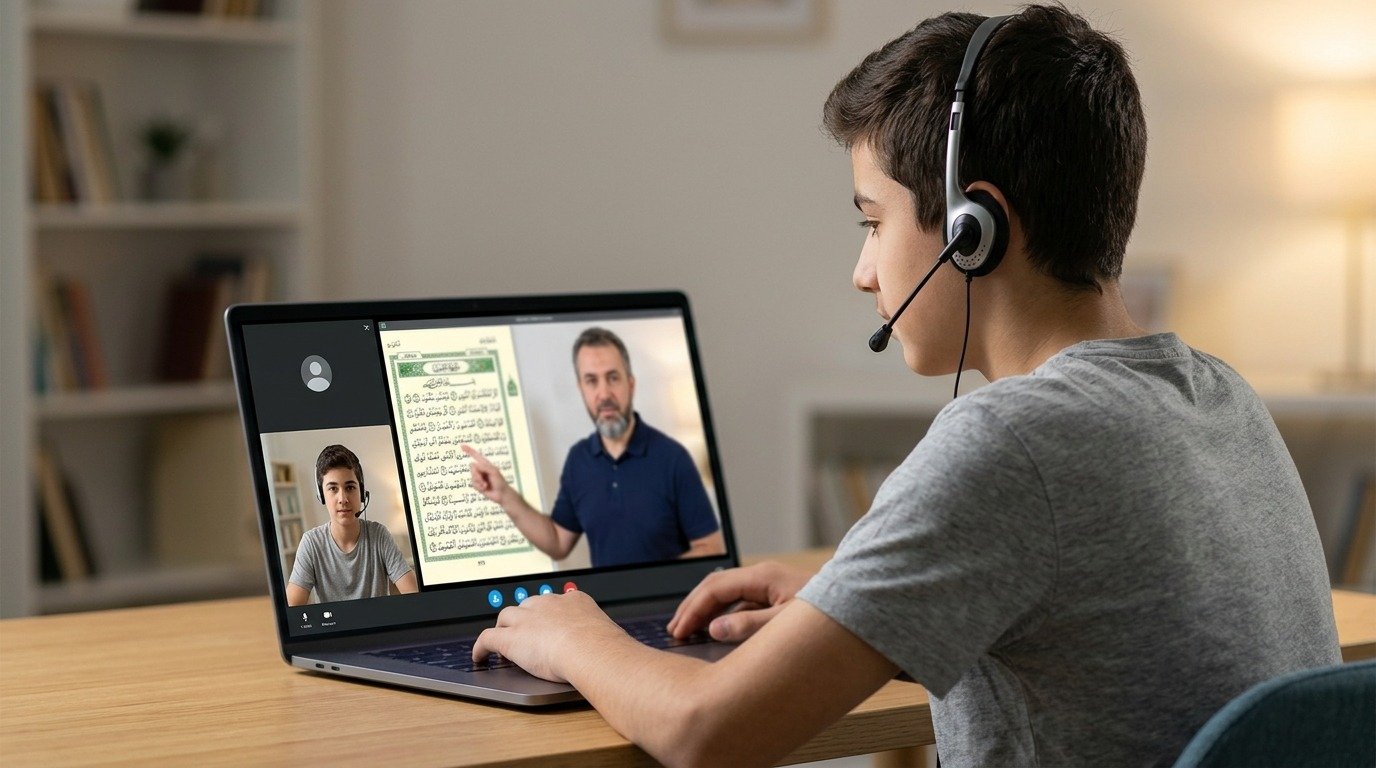
For families unfamiliar with the format, individual lessons through online Quran classes for kids typically mean a dedicated teacher working exclusively with your child for the full session, adjusting pace, correction style, and even the mood of the lesson entirely around that one child's needs on any given day. This allows for a level of responsiveness that a group format, however well run, structurally cannot match, since a group teacher must always balance attention across several students simultaneously.
What You Might Be Trading Away by Choosing Individual Lessons
It is worth being honest that one-on-one lessons are not universally superior, they simply suit different needs than group lessons do. Group settings offer social motivation that some children genuinely benefit from, a sense of camaraderie with peers working toward similar goals, occasional friendly competition that spurs effort, and often a livelier, more energetic atmosphere that some children find more engaging than the quieter, more intense focus of individual sessions. Individual lessons also typically cost more per session than group equivalents, which is a real practical consideration for many families.
If your child is generally thriving socially and academically in a group setting, there is no need to switch simply because individual lessons exist as an option. The signs described in this article are meant to help identify when a child is specifically struggling within a group format, not to suggest that individual lessons are automatically the better choice for every family in every situation.
How to Test the Waters Before Fully Committing
If you are noticing several of these signs but are not fully certain individual lessons are the right move, many programs allow a trial period or a short term switch to individual format before committing to a longer term change. This lets you observe directly whether your child's engagement, confidence, and progress genuinely shift with the format change, rather than making a significant decision based purely on speculation about what might help.
Pay attention during this trial period not just to whether your child seems happier in the moment, switching formats often produces a temporary novelty boost regardless of whether it is the right long term fit, but to whether the specific issues that prompted the switch, falling behind, anxiety about speaking up, mismatched pacing, actually show real improvement over several sessions.
A Middle Ground Worth Considering
Some families find that a hybrid approach works well, keeping a child in a group setting for the social and motivational benefits while adding occasional individual sessions specifically to address a particular struggle, catching up on missed material, working through a specific pronunciation issue, or simply building confidence before returning fully to the group dynamic. This is not available through every program, but it is worth asking about directly if you like the idea of a group setting overall but have identified a specific gap that individual attention could help close.
Talking to Your Child About the Switch
If you do decide to move your child from group to individual lessons, or vice versa, how you frame the conversation matters. Presenting a switch to individual lessons as a positive change, more attention just for you, a chance to move at exactly your own pace, tends to land much better than framing it in a way that could feel like a demotion or a consequence of falling behind. Children are often more perceptive than we expect about tone, and a switch framed with genuine enthusiasm rather than concern usually gets a much warmer reception.
Questions to Ask When Choosing an Individual Teacher
If you decide individual lessons are the right move, it is worth asking a few specific questions before choosing a teacher: how does the teacher typically adjust pacing for a child who has been struggling in a group setting previously, what does a typical individual session look like structurally, and how does the teacher handle building confidence in a child who has developed some anxiety or embarrassment around recitation. A thoughtful, specific answer to these questions is usually a good sign of a teacher genuinely experienced with exactly the kind of transition your child may be going through, rather than someone simply offering individual lessons as a generic, interchangeable service.
Reaching out through a program's contact page to discuss your child's specific situation before enrolling is a good way to get a sense of whether a given teacher or program has real experience with children coming from a group setting, versus one built primarily around students who started individually from day one.
Real Examples of How This Plays Out
It can help to see how these signs show up in actual family situations rather than staying purely abstract. Consider a seven year old who started in a group class alongside two cousins close in age. Within a few months, it became clear she was consistently a page or two behind where the group had moved on to, not because she lacked ability but because the group's pace, set to match the two faster cousins, simply moved past what she needed more repetition on. Her parents noticed increasing reluctance to attend, small complaints of stomach aches before class that had not appeared before. After switching to individual lessons, her pace slowed to something that actually matched her needs, and within a few weeks the reluctance and physical complaints disappeared entirely.
Consider a different example, a nine year old boy who was actually ahead of his group class, having had some prior informal exposure to Quran reading through a grandparent, and found the group pace frustratingly slow. He began acting out during sessions, not from struggling but from boredom and restlessness at material he had already mastered. His parents initially assumed this was a behavioral issue needing discipline, until a conversation with the teacher revealed he was simply unchallenged. Individual lessons allowed him to move at a faster, more appropriately challenging pace, and the behavioral issues resolved as his engagement returned.
Consider a third example, a shy six year old who would not speak above a whisper during group recitation, clearly capable based on what her mother heard at home but seemingly unable to perform in front of even a small group of peers. A few months of individual lessons, where the audience pressure was removed entirely, rebuilt her confidence to the point where she was eventually comfortable rejoining a small group setting, carrying that confidence with her into the social format she had originally struggled with.
These three examples represent three different underlying reasons for the same surface level solution, moving to individual lessons, which illustrates why it is worth diagnosing your own child's specific situation rather than assuming there is one universal reason families make this switch.
How Long Individual Lessons Typically Need to Continue
Parents sometimes assume a switch to individual lessons is permanent, but in many cases it functions more like a temporary intervention, addressing a specific gap, whether pacing, confidence, or a particular skill, after which a child may return comfortably to a group setting if that format's social benefits are something the family values. Other families find their child simply does better long term with individual attention and continue with that format indefinitely, which is equally valid. There is no fixed timeline that applies universally, and the right duration depends entirely on why the switch was made in the first place and how your child responds over time.

What This Means for Older Children Preparing for Bigger Goals
For older children pursuing more ambitious goals, such as working toward ijazah certification or intensive memorization targets, individual lessons often become almost a practical necessity rather than an optional preference, simply because the level of precise correction and individualized pacing required at that stage is difficult for a group format to provide effectively. If your child is moving toward this kind of advanced, specialized goal, it is worth planning for a transition to individual instruction as a natural part of that trajectory rather than treating it as a sign that something has gone wrong with the group approach used earlier in their journey.
Frequently Asked Questions
Will my child feel singled out or self-conscious about needing individual lessons instead of joining a group like their friends? Some children do briefly wonder about this, but most quickly come to appreciate the format once they experience the benefits directly, more comfortable pacing, more direct attention, less pressure. Framing the switch positively, as described earlier, generally prevents this concern from becoming a real issue.
Is it more expensive to choose individual lessons, and is that cost difference usually worth it? Individual lessons do typically cost more per session than group equivalents, since a teacher's time is not being shared across multiple students. Whether that additional cost is worth it depends on how significantly your child was struggling in the group format and how much value your family places on faster, smoother progress and a more positive emotional experience during lessons. Many families view this as a worthwhile investment specifically during a period when a child clearly needs it, even if they return to a more affordable group format later once the underlying issue has been resolved.
Can a switch to individual lessons happen mid-term, or does it require waiting for a natural break point? This varies by program, but many academies are flexible about transitioning students between formats whenever a genuine need is identified, rather than requiring families to wait for an arbitrary term boundary. It is worth asking directly about this flexibility when discussing a potential switch.
What if I try individual lessons and my child still does not show improvement? If a switch to individual lessons does not produce the hoped for improvement after a genuine trial period, several sessions at minimum, it is worth having an honest conversation with the teacher about what else might be going on. Sometimes the format was not actually the core issue, and something else, teacher personality fit, underlying anxiety unrelated to Quran learning specifically, a need for an even slower pace, needs to be addressed instead.
Trusting Your Own Read on Your Child
Ultimately, no article or checklist can substitute for a parent's own close observation of their specific child. You are the person who sees your child's face light up or fall during and after lessons, who hears the small comments about how class went, who notices the subtle shifts in enthusiasm or reluctance over weeks and months. If several of the signs described here resonate strongly with what you have been observing, that instinct is worth taking seriously and acting on, even before every single detail lines up perfectly with a generic checklist.
Conversely, if your child seems generally happy, engaged, and steadily progressing in a group setting, there is no need to second guess a format that is clearly working well simply because this article exists. The goal here is not to push every family toward individual lessons, but to help you recognize the specific signs when a format switch really would help a struggling or mismatched child find their footing again.
How This Fits Into a Family's Broader City and Schedule Context
For families in busier metropolitan areas juggling a lot of competing commitments, for instance those exploring online Quran classes in Los Angeles around long commute times and packed after-school calendars, individual lessons often solve two problems simultaneously: the pacing and attention concerns described throughout this article, and the scheduling flexibility that a fixed group class time simply cannot offer. If your family's daily rhythm is already tightly packed and unpredictable, this practical flexibility alone can be a strong argument for individual lessons, even setting aside the pedagogical signs discussed earlier.
Bringing It All Together
Signs that your child might benefit from one-on-one Quran classes include falling behind or racing ahead of a group's pace, visible anxiety or shyness specifically tied to the social pressure of group recitation, a diagnosed or suspected learning difference that needs more individualized adaptation, embarrassment about falling behind that is affecting willingness to participate, a family need for scheduling flexibility that group classes cannot accommodate, and a general temperament that simply thrives more with focused individual attention across various activities, not just Quran lessons specifically.
None of these signs alone is a definitive verdict, and most families benefit from combining honest observation of their own child with an open conversation with a current or prospective teacher before making a switch. Whatever you decide, know that both group and individual formats can lead to strong, confident Quran readers. The goal is simply matching the format to what your specific child needs right now, with the understanding that this match can and often does change over time as your child grows and their needs evolve.
Whichever format you choose, staying attentive, flexible, and willing to adjust as circumstances change will serve your child far better than locking into one approach out of habit or convenience alone. Quran learning is a long journey, and the format that fits best at age six may look quite different from what fits best at age twelve, and that evolution is a completely normal, healthy part of a child's growth as a learner.
Trust what you see in your own child, stay in conversation with their teacher, and adjust the format whenever the evidence points that way.
That responsiveness, more than any single format choice, is what ultimately helps a child thrive over the years of learning ahead.
Keep watching, keep asking, and keep choosing what actually works for your child today.
Add New Comment