

Best Age to Start Quran Classes
Every parent who reaches out to us with questions eventually asks some version of the same thing. Is my child too young? Did we wait too long? Should we have started at three, or is six actually fine? It is one of the most common questions we hear, and honestly, it deserves a real answer rather than a one line reply. So we put together this FAQ style guide pulling together the questions parents ask most often about timing, readiness, and what actually matters when you are deciding when to begin.
Is there one correct age to start Quran classes?
No, and any answer that pretends otherwise is oversimplifying things. Children develop at different paces. Some four year olds can sit still, focus, and repeat sounds back with real attention. Other four year olds cannot sit through a five minute story without wandering off. Age is a useful starting point for a conversation, but it is not the deciding factor on its own. What matters more is a cluster of things: attention span, comfort with basic listening and repeating, and whether the child is emotionally ready to sit with an adult who is not a parent or sibling, even if that adult is warm and patient.
That said, parents do want a number, so here is a reasonable range. Most academies, including ours, find that children between four and six years old are ready for gentle, playful introductory lessons focused on letter recognition, sound repetition, and short songs or rhymes that build familiarity with Arabic phonetics. Formal, structured lessons with a clear curriculum tend to work better starting around six or seven, once a child has some early reading skills in their first language and can sit for fifteen to twenty minutes with reasonable focus.
What if my child is already eight or nine and hasn't started yet?
This is one of the most common worries we hear, and it comes from a good place, but it is rarely something to worry about. Eight and nine year olds are actually excellent students in many ways. Their attention spans are longer, their reading skills in English or their home language are more developed, and they can grasp abstract instructions much faster than a five year old can. What takes a four year old six months to internalize might take an eight year old six weeks. There is no meaningful ceiling that closes at some earlier age. Children, and honestly adults too, can begin at any point and make real progress.
If anything, older beginners sometimes move through foundational material faster because they already understand concepts like letters representing sounds, or the idea of reading left to right versus right to left. They are not starting from zero in terms of literacy concepts, just in terms of this particular script and language.
Does starting early actually make a long term difference?
There is some truth to the idea that early exposure builds comfort. A child who hears Arabic sounds and short surahs from age three or four often develops an ear for the rhythm and pronunciation that can make later, more formal Tajweed instruction smoother. This is similar to how children exposed to a second language early on tend to pick up accent and intonation more naturally than someone starting as a teenager.
But comfort is not the same as mastery, and early starting is not a guarantee of anything. We have seen plenty of children who started at four and lost interest by seven, and plenty of children who started at nine and became strong, motivated readers within two years. The single biggest predictor of long term success is not the starting age. It is consistency, a teacher the child actually likes working with, and a home environment where Quran learning is treated as normal and valued rather than as an extra chore squeezed in after everything else.
What does readiness actually look like at different ages?
Parents often ask us to describe what a "ready" child looks like, so here is a rough breakdown based on what we see across thousands of students.
Around ages three to four, readiness looks like enjoying songs, rhymes, and repetition games. A child at this age is not ready for a structured lesson plan, but they can absolutely benefit from short, playful sessions that introduce sounds and letters through games rather than worksheets. If your three year old enjoys sing song repetition of familiar surahs at bedtime, that counts as meaningful early exposure, even without a formal class.
Around ages five to six, most children can sit through a proper fifteen to twenty minute lesson with a teacher, follow simple instructions, and begin connecting letter shapes to sounds in a structured way. This is a very common and successful starting point for formal Noorani Qaida instruction.
Around ages seven to nine, children generally have the attention span for thirty minute lessons, can retain vocabulary and rules between sessions, and start being able to self correct pronunciation with feedback rather than needing constant repetition. This age group often moves through foundational material at a faster pace than younger beginners.
From ten and up, children can typically handle everything an adult beginner can handle, just with more energy and often less self consciousness about making mistakes in front of a teacher.
Should twins or siblings close in age start together?
This comes up a lot, and the honest answer is that it depends entirely on the children involved. Some siblings thrive learning side by side, pushing each other gently and enjoying the shared routine. Others compete in ways that create frustration, especially if one sibling picks things up faster than the other. If you notice one child getting discouraged because a younger sibling is "ahead," it may be worth separating their lesson times, even if they are learning from the same teacher on different days. There is no rule that says siblings need to learn together just because they are close in age.
Is it better to wait until a child can already read in English?
Not necessarily, though there is some logic behind the question. Parents sometimes assume that literacy in one language needs to come first. In practice, learning to recognize Arabic letters and sounds does not require English literacy as a prerequisite. Plenty of programs, including ours, work successfully with children who are still learning to read in their first language, because Noorani Qaida instruction starts from letter sounds and basic phonetics rather than assuming any prior reading ability. If your child is not yet reading fluently in English, that alone is not a reason to delay starting.
What about children with attention challenges or a diagnosed learning difference?
Every child is different here, and this is really a conversation to have directly with a teacher rather than something to self diagnose from a general guide. What we can say is that a good teacher adjusts pace and lesson structure to the individual child rather than forcing every student through an identical script. Shorter, more frequent sessions often work better than longer, less frequent ones for children who struggle with sustained attention. If this describes your child, it is worth mentioning it before the first lesson so the teacher can plan accordingly rather than being caught off guard mid lesson.
How do I know if my child is emotionally ready, separate from cognitive readiness?
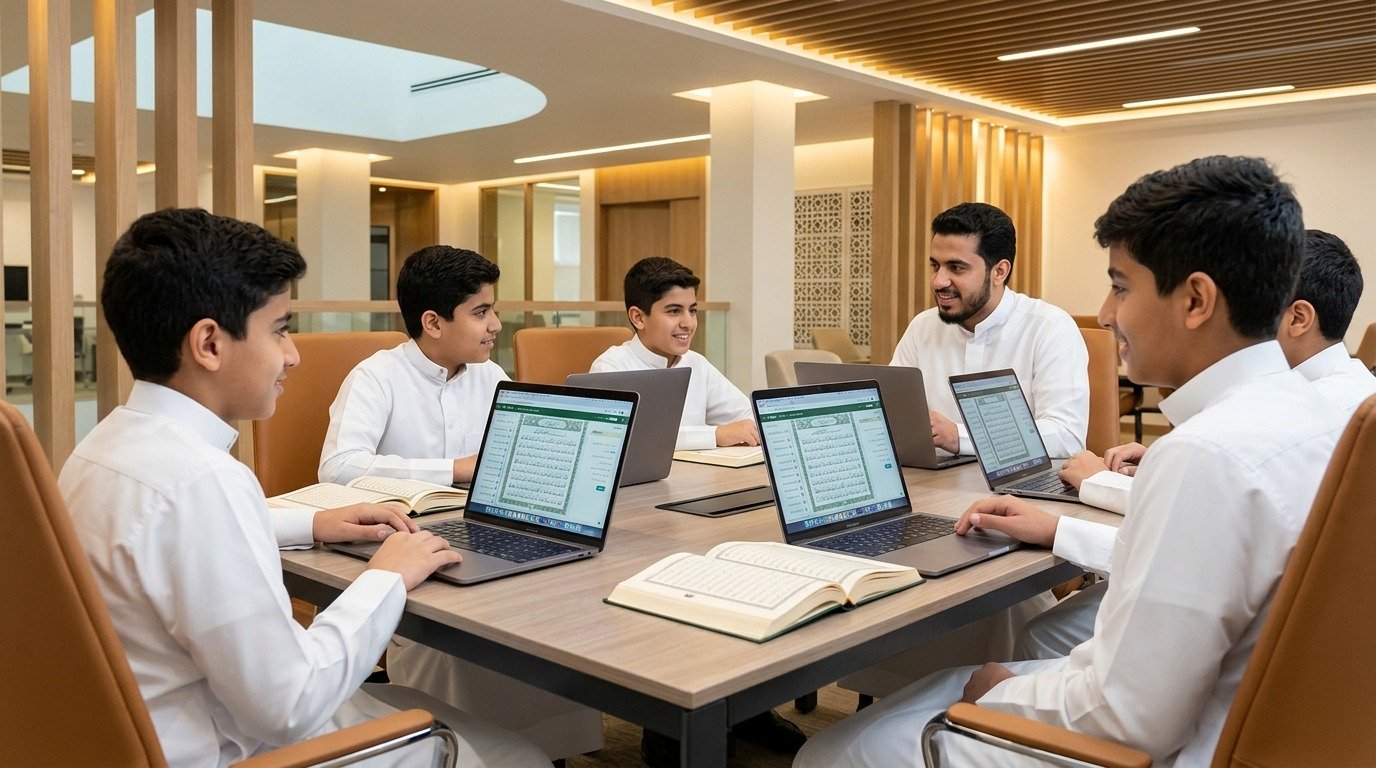
Emotional readiness is honestly just as important as cognitive readiness, and it is the piece parents think about least. A child can be perfectly capable of learning the material and still not be ready if they are anxious about talking to a new adult, or if they associate lessons with pressure rather than curiosity. Signs of emotional readiness include being able to separate briefly from a parent (even just being in a different room during an online lesson), asking questions when confused rather than shutting down, and showing some baseline curiosity about the subject rather than active resistance.
If your child seems anxious about starting, it sometimes helps to sit in on the first few lessons, particularly with online classes where you can be present in the room without hovering directly behind the screen. Many online Quran classes for kids are built with this kind of flexibility in mind, since teachers are used to working with a parent nearby during the earliest sessions.
Does the age matter differently for memorization versus reading?
Yes, actually. Reading fluency and memorization draw on somewhat different cognitive skills, and the ideal starting points can differ slightly. Reading instruction can begin quite young, since it is built on letter and sound recognition. Memorization, particularly structured memorization with a formal review schedule, tends to work best once a child has developed a bit more working memory capacity, which usually becomes more reliable somewhere around six or seven. This does not mean a four year old cannot memorize short surahs through repetition and song, because plenty do, but a formal Hifz track with review cycles and retention checks is usually more productive once a child is a little older.
What if we started late and I feel guilty about it?
We hear this from parents fairly often, and we want to say clearly that guilt is not a useful ingredient here. Children are not on a countdown clock. There is no expiration date on beginning to learn the Quran, and a ten year old who starts today with enthusiasm and a supportive home is in a genuinely good position, regardless of when their siblings or friends' children started. What actually shapes a child's relationship with learning is how it feels day to day, not the calendar age at which it began.
How long should a first lesson be, regardless of age?
Shorter than you probably expect. For a first lesson, fifteen minutes is often plenty, even for a seven or eight year old. The goal of a first session is not to cover material, it is to build comfort with the format, the teacher's voice, and the rhythm of a lesson. Academies that rush a full length lesson on day one sometimes create unnecessary resistance before a child has even had a chance to settle in.
Can a child switch from group to individual lessons later if the starting format doesn't fit?
In most well structured programs, yes. Starting age and starting format are two separate decisions, and neither one has to be permanent. A shy five year old might do better in a one on one setting initially and transition into a small group later once they have built confidence. An outgoing seven year old might start in a group and later need individual attention once the material gets more demanding. Flexibility on format matters more than getting the starting age exactly right on the first try.
What role does the parent play, no matter the child's age?
A larger role than most parents initially expect, honestly. Younger children need a parent nearby to help with focus and to reinforce short practice moments between lessons. Older children need less physical presence but still benefit enormously from a parent who asks about the lesson afterward, celebrates small progress, and treats the subject with genuine interest rather than just checking a box. The starting age matters less than the ongoing environment a child returns to after each lesson.
Our recommendation, if you want a simple answer
If you are looking for a single practical takeaway: somewhere between five and seven is a strong, common starting age for structured lessons, but it is genuinely fine to start earlier with playful exposure or later with a more focused approach. The right time is less about hitting a number and more about noticing your child's own signals of curiosity and readiness, and pairing that with a teacher who knows how to meet them where they are.
If you are unsure where your own child fits into all of this, it often helps to talk it through directly rather than guessing. Many families find it useful to look into online Quran classes that offer a trial lesson, since seeing how your child responds to an actual teacher tells you far more than any age guideline can.
A few closing thoughts on siblings, timing, and starting over

One thing we remind parents of often: starting is rarely the hard part. Sticking with it consistently through the early weeks, when progress feels slow and a child's attention wanders, is where most families actually struggle. So instead of spending too much energy pinpointing the exact right age, it is usually more useful to focus on building a manageable, low pressure routine once you do start, whatever age that turns out to be.
For families in bigger cities juggling school schedules, extracurriculars, and everything else, flexibility in timing matters a great deal. Families based near online Quran classes in New York often mention that the online format itself, rather than any particular starting age, is what made consistency possible in the first place, simply because it removed the commute and let lessons fit around an already busy week.
If your child also shows interest in the broader picture of faith and practice, not just reading skills, it can help to pair early Quran lessons with age appropriate online Islamic classes for kids, since many young learners respond well to understanding the context and meaning behind what they are reading, even at a very simple level.
And if pronunciation and correct articulation feel like they should start early rather than being left for later years, know that gentle online Tajweed classes for kids can be introduced gradually alongside basic reading, especially once a child has a handle on the alphabet and is starting to read short words with some confidence.
Does the season or time of year matter for starting?
Parents sometimes ask whether it makes more sense to start during the school year or wait for summer break, assuming that a less busy stretch will make the transition easier. In our experience it genuinely does not matter much either way. Summer can offer more flexible scheduling, which is nice, but children are also often out of routine during summer months, and lessons started then sometimes lose momentum once school picks back up in the fall. Starting during the school year forces a routine to form alongside other academic habits, which some families find actually works better because the child is already in a rhythm of sitting down for focused work. There is no wrong season. What matters more is picking a stretch of at least eight to ten weeks where your family's schedule is reasonably stable, so the first block of lessons has a fair chance to become a habit before life gets busy again.
What if my older child feels embarrassed starting later than peers?
This is a real and understandable feeling, especially for children around nine to twelve who are aware that classmates or cousins started years earlier. A few things tend to help. First, an individual or one on one setting removes the social comparison entirely, since there is no peer group to feel behind in front of. Second, framing the start honestly with your child, something like "everyone begins at their own point, and yours is right now," goes a long way, more than parents sometimes expect. Third, older beginners genuinely do progress faster through foundational material precisely because of their more developed attention and reasoning skills, so the "behind" feeling is often temporary and resolves within a few months once real progress becomes visible to the child themselves.
How do online classes change the readiness picture compared to in person ones?
Online lessons remove some traditional readiness concerns and introduce a few new ones. On the positive side, a child does not need to be ready for the social dynamics of a physical classroom or the transition of being dropped off somewhere unfamiliar, since they are learning from home with a parent nearby. This can make online lessons a gentler entry point for anxious or shy children of any age. On the other hand, a child does need enough comfort with screens and basic navigation, like sitting in front of a camera and following an on screen worksheet, to make the format work smoothly. Most children by age five or six have enough general familiarity with screens through everyday life that this is rarely a genuine barrier, but it is worth a brief thought if your child has very limited screen exposure so far.
Is there a maximum age where starting later actually becomes harder?
Not in any meaningful sense, no. Teenagers can and do start from the very beginning successfully, and so do adults well into later life. What changes with age is not capacity but sometimes motivation and self consciousness, particularly for teenagers who may feel awkward being a true beginner at something their younger siblings already know. This is a social and emotional hurdle rather than a learning one, and it is usually addressed through private, individual lessons rather than group settings, along with a teacher who is experienced at working with older beginners and understands how to keep the pace respectful of where the student actually stands rather than assuming embarrassment where there might be none.
The bottom line
There is no perfect age, only a range of reasonable ones and a lot of individual variation within that range. Trust what you observe in your own child more than any general rule, start smaller than you think you need to, and give the early weeks room to be a little slow and a little imperfect. That patience at the start tends to pay off far more than getting the exact starting age right.
If you take away only one thing from this guide, let it be this: the question is not really "what is the best age," it is "is my child showing curiosity and enough attention to sit with a patient teacher for fifteen minutes." Once the answer to that is yes, whatever the calendar says, you are ready to begin.
Add New Comment