
Why Learning Quran Online Saves Time

Time is the resource every busy parent and working adult feels shortest on, and it is also the single biggest reason families cite for choosing online Quran classes over a traditional in-person arrangement. This comparison lays out, side by side, exactly where the time savings come from, since the benefit is often bigger and more concrete than people expect before they actually try it.
Traditional: The Commute Tax
An in-person class at a mosque or Islamic center almost always requires driving there and back, plus the buffer time built in for parking, traffic, and simply getting everyone out the door on time. For many families, this commute alone eats up thirty to sixty minutes round trip for a single lesson, sometimes more depending on distance and traffic patterns.
Online: Zero Commute Time
An online lesson starts the moment a device is opened, with no driving, no parking, and no rushing out the door. Over a year of weekly lessons, this difference alone can save families dozens of hours that would otherwise be spent purely in transit rather than in actual learning or anything else productive.
Traditional: Fixed Scheduling Around a Physical Location's Availability
In-person classes are usually scheduled around when a physical space and a teacher happen to both be available, often clustering into a narrow window on weekend mornings when many other family activities also compete for the same time slot.
Online: Flexible Scheduling Around Your Own Life
Online lessons can generally be scheduled at whatever time genuinely works best for a specific family, whether early morning before school, right after work, or a quiet evening slot once younger children are in bed. This flexibility often means lessons actually happen consistently, rather than being skipped because the one available in-person slot conflicted with something else that week.
Traditional: Waiting for a Turn in a Group Setting
Many in-person classes, particularly at busy weekend schools, involve a group setting where each child gets only a small slice of direct teacher attention during a longer overall session, with a lot of the total time spent waiting for a turn or listening to other students being corrected.
Online: Concentrated One-on-One Time
A thirty minute online one-on-one session is often more productive than a full hour in a crowded group class, since every minute is spent directly on that one student's specific needs rather than divided among many. This means less total scheduled time is needed to achieve the same or better learning outcomes.
Traditional: Rescheduling Around Illness or Bad Weather
A sick child, a snowstorm, or car trouble often means missing an entire in-person class outright, with no easy way to make up the lost time until the following week, creating gaps that compound over a full school year.
Online: Easy Rescheduling Without Losing the Week
A mild illness or a scheduling conflict online often just means shifting the same day's lesson by an hour or two, or moving it to another day that week, since there is no physical space or commute to coordinate around. This flexibility keeps consistency intact far more reliably than a rigid in-person schedule allows.
Traditional: Limited to Local Teacher Availability
Families in areas without a strong local Islamic education infrastructure sometimes have very few teacher options nearby, occasionally settling for whichever teacher happens to be available locally rather than the best fit for their child's specific needs.
Online: Access to the Right Teacher Regardless of Location
Online learning removes geography from the equation almost entirely. A family can work with an excellent, well-matched teacher regardless of where either of them happens to live, which often means better learning outcomes achieved in less total time, since a well-matched teacher produces faster progress than a poorly matched one, even with identical class lengths.
Traditional: Sibling Coordination Headaches
Families with more than one child often face a logistical puzzle fitting multiple children's in-person classes into a single trip, sometimes waiting around at a location for one child's session to end before another begins, turning what should be a single scheduled activity into a much longer block of the day spent largely waiting rather than doing anything productive.
Online: Back-to-Back Sessions Without Wasted Waiting Time
Online sessions for multiple children can often be scheduled back to back with minimal gap, since there is no physical transition between locations required. A parent can supervise one child's lesson, then immediately help transition to a sibling's lesson right after, without the dead time of driving between two separate in-person commitments or waiting in a car or lobby for an hour between two classes at the same location.
Traditional: The Hidden Cost of Preparation Time
Getting ready for an in-person class involves more than just the drive. It typically means getting children dressed appropriately, gathering materials, coordinating who else in the family needs to be somewhere at the same time, and building in a buffer for the inevitable last-minute delays that come with getting a household out the door together.
Online: Minimal Preparation Overhead
Preparing for an online lesson typically means opening a laptop or tablet and having a Mushaf ready, a preparation process that takes a couple of minutes rather than the twenty or thirty minutes of coordination often required before leaving the house for an in-person class. Over the course of a year, this reduced preparation overhead adds up to meaningfully more free time for a busy family.
Traditional: Classes Bound to a Fixed Academic Calendar
Many in-person Islamic schools follow a fixed academic calendar with set holiday breaks, sometimes creating multi-week gaps during summer or major holidays where no classes happen at all, which can disrupt the momentum a student has built over the preceding months.
Online: Continuity Through the Full Calendar Year
Online programs can often continue through the summer or adjust minimally around holidays, since there is no shared physical building or transportation schedule dictating a fixed break period for everyone simultaneously. This continuity, even at a reduced pace during busier stretches of the year, tends to preserve more of a student's progress than a long enforced break would.
Traditional: Time Lost to Group Management Overhead
In a group classroom setting, a meaningful portion of total class time inevitably goes toward general classroom management, settling children in, addressing behavior across a room of multiple students, and transitioning between activities as a group rather than moving at any individual student's own natural pace.
Online: Direct Focus From the First Minute
A one-on-one online session typically moves directly into instruction within the first minute or two, since there is no larger group to settle or manage. This means a higher proportion of the scheduled time is spent on actual learning content rather than on the administrative overhead that naturally comes with managing a room full of students at once.
Traditional: The Opportunity Cost of a Parent's Time
For younger children attending in-person classes, a parent often needs to be present for the entire drive and wait period, sometimes an hour or more per session once travel time on both ends is included, time that could otherwise go toward work, rest, or other family responsibilities.
Online: Parents Reclaim That Time
With an online lesson happening at home, a parent's time commitment shrinks to whatever direct supervision the lesson itself requires, often much less than the full commute-plus-wait time an in-person class demands. Many parents describe this reclaimed time as one of the most immediately noticeable benefits of switching to an online format, often more significant day to day than they initially expected before making the switch.
Traditional: Difficulty Finding a Consistent Long-Term Teacher
In-person programs sometimes experience staff turnover, requiring a student to adjust to a new teacher's style and pace periodically, which can slow overall progress each time a transition happens, since some time is inevitably spent rebuilding rapport and re-establishing where exactly a student left off.
Online: Easier to Maintain a Long-Term Teacher Relationship

Because online teachers are not tied to a specific physical location, families often maintain a relationship with the same teacher for years, even through moves to a new city or state, preserving continuity that would otherwise be broken by a physical relocation in a traditional in-person arrangement.
Traditional: Squeezing Learning Into an Already Packed Weekend
Weekend Islamic school has long been the default model for many families, but weekends are also when most other extracurricular activities, sports practices, birthday parties, and family visits tend to cluster, creating direct competition for the same limited hours and often forcing families to choose between Quran class and something else important happening at the same time.
Online: Spreading Learning Across Weekdays Instead
Online scheduling flexibility often allows families to move Quran lessons to a weekday evening slot instead, freeing up weekends for other activities entirely and removing the recurring scheduling conflict that weekend-only in-person programs frequently create. This single shift alone resolves a significant source of the stress families associate with fitting religious education into an already busy week.
Traditional: A Full Semester Lost to a Single Relocation
Families who move to a new city for work or other reasons often face a real gap in their child's religious education while searching for a new in-person program, sometimes going months without any structured Quran instruction simply due to the logistics of finding and vetting a new local option.
Online: Continuity Through Any Relocation
An online arrangement can continue completely uninterrupted through a move, whether across town or across the country, since the teacher and student connect the same way regardless of either party's physical location. This continuity preserves months of progress that a relocation would otherwise threaten to undo in a traditional in-person setup.
Adding Up the Numbers Over a Full School Year
Consider a rough estimate for a family with a single weekly forty-five minute in-person class, plus a thirty minute round trip commute and roughly fifteen minutes of preparation and waiting time built into each visit. That adds up to ninety minutes total per week just to attend a forty-five minute class, meaning nearly half the total time commitment is overhead rather than actual instruction. Across a forty week school year, that overhead alone totals exactly twenty hours, a full work week's worth of time spent purely on logistics rather than learning.
Removing that overhead through an online format effectively returns that entire block of time to a family's year, time that can go toward rest, other activities, or simply a less rushed and stressful weekly schedule overall.
Is Anything Actually Lost by Moving Online
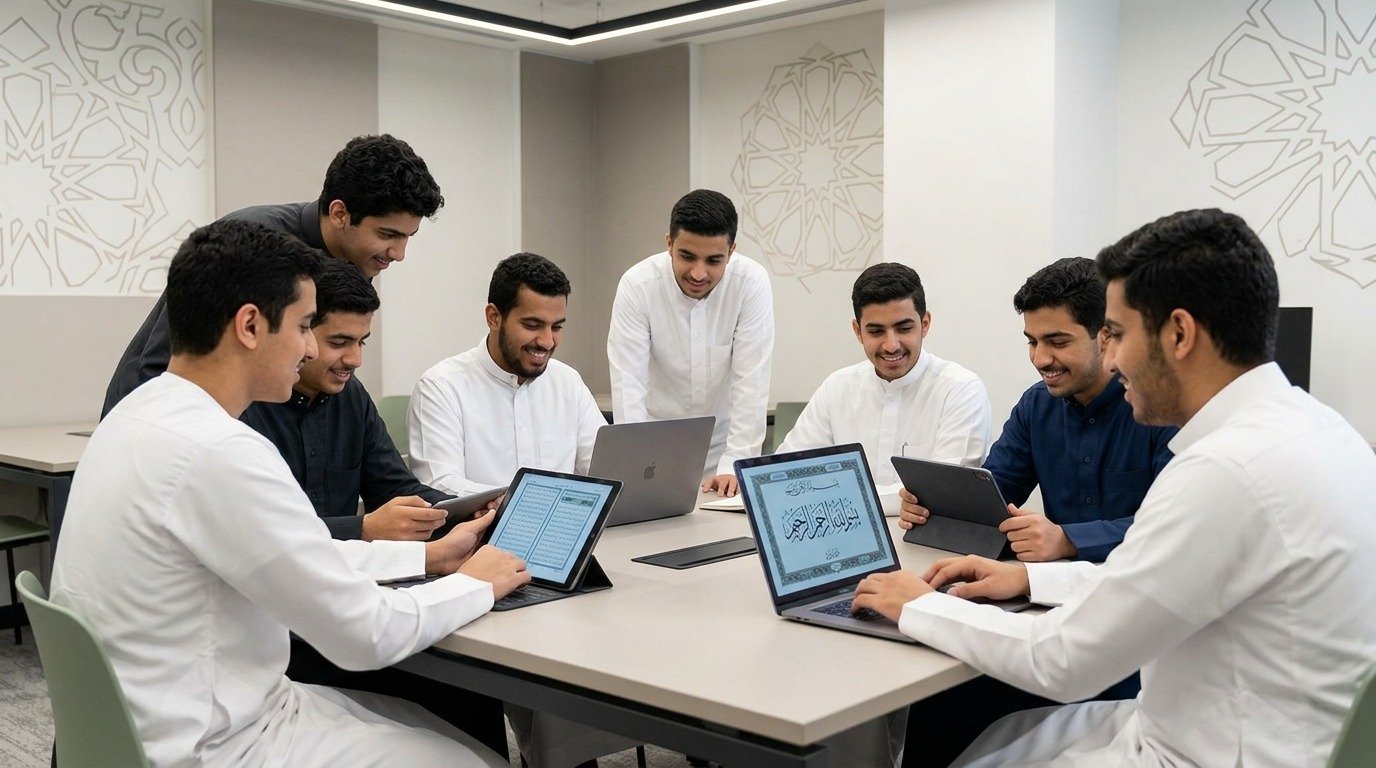
It is worth addressing honestly whether this time efficiency comes at any real cost. Some families genuinely value the in-person community aspect of a physical Islamic school, the friendships formed among classmates, and the sense of a shared physical space dedicated to learning. These are real, legitimate benefits of the in-person model that an online format does not fully replicate on its own.
Many families address this by supplementing online academic instruction with separate community events, weekend gatherings, or a local mosque's youth programs specifically for the social dimension, while keeping the actual weekly Quran instruction online for the time efficiency described throughout this article. This combined approach lets a family capture much of the time savings without fully sacrificing the community connection some families value from a traditional setup.
How Adults Benefit From the Same Time Savings
Everything described so far applies just as strongly, sometimes more so, to working adults trying to fit their own Islamic studies or Quran learning into an already demanding career and family schedule. An adult juggling a full time job and family responsibilities often has even less flexibility for a fixed in-person commute-and-class block than a child does, making the time efficiency of online learning arguably even more valuable for this group specifically.
A Realistic Way to Estimate Your Own Time Savings
To get a genuine sense of what switching to online learning might save your own family, try tracking exactly how much total time, commute included, a single in-person class currently consumes for one full week, then compare that honestly against what an online session of similar length and quality would require. Most families are surprised by just how large the gap turns out to be once they actually measure it rather than estimate it casually.
Time Savings Compound the Longer You Learn
The time saving benefit of online learning is not a one-time gain. It compounds week after week, year after year, as long as the arrangement continues. A family saving even ninety minutes a week through reduced commute and preparation time accumulates roughly seventy eight hours over a single year, and multiplied across several years of ongoing Quran education, the total time reclaimed becomes substantial, often equivalent to several full weeks of a person's life that would otherwise have gone toward driving and waiting rather than anything more valuable.
How This Time Savings Changes the Decision to Even Start
For some families, the time and logistical burden of an in-person program is actually the deciding factor in whether structured Quran education happens at all, not just how efficiently it happens. Removing that burden through an online option sometimes makes the difference between a family finally starting consistent religious education for their children and continuing to put it off indefinitely because the logistics of a traditional program simply never fit into an already full schedule.
What to Look for When Choosing an Online Program to Maximize This Benefit
Not every online program is equally efficient with time. Look for programs offering flexible scheduling windows rather than a narrow fixed slot, a straightforward technical setup that does not require extensive preparation before each session, and teachers experienced specifically in the online format who know how to use every scheduled minute effectively rather than losing time to technical fumbling or an unfocused session structure.
A Few Honest Caveats Worth Mentioning
Online learning saves time most reliably when a family already has a reasonably stable internet connection and a quiet space at home to hold sessions without frequent interruption. Families without these basic conditions in place may find some of the time savings offset by technical troubleshooting or environmental distractions, though these are generally solvable issues rather than fundamental barriers to the format working well.
It is also worth being realistic that time saved on logistics does not automatically translate into more effective learning on its own. The saved time is valuable mainly because it makes consistency easier to maintain, and consistency, as covered extensively elsewhere, is the real driver of actual progress in reading and Tajweed skill.
Putting the Comparison Into a Simple Summary
Side by side, the traditional in-person model tends to require more total time per unit of actual instruction received, due to commute, waiting, group management overhead, and rigid scheduling. The online model tends to concentrate a family's time investment directly into instruction itself, with minimal overhead surrounding it. For nearly every busy family weighing the two options primarily on time efficiency, the online format comes out clearly ahead, without requiring any sacrifice in the quality of instruction itself when a well-matched, experienced teacher is involved.
None of this means the traditional model has no value, and plenty of families continue to thrive with an in-person arrangement, particularly where a strong local program and community already exist. But for the many families juggling demanding schedules, long commutes, or a lack of strong local options, the time efficiency of online learning is not a minor convenience. It is often the practical difference between consistent, sustained progress and a program that quietly falls apart under the weight of its own logistical demands.
If your family has been hesitant to start structured Quran education purely because the logistics of an in-person program feel unmanageable given everything else on your plate, the online alternative exists specifically to remove that barrier, and the time it gives back tends to make consistent, long-term learning genuinely realistic in a way it might not have felt before.
Measure your own current time cost honestly, weigh it against what an online format could offer instead, and let that comparison guide the decision rather than assumptions about what online learning can or cannot deliver.
Time, once spent, cannot be recovered, and every hour saved on logistics is an hour that can go toward the learning itself, toward family, or simply toward a little more rest in an already demanding week.
That is really the heart of why so many families have made the switch, and why so few who make it end up going back to the traditional model afterward.
Consider giving it a genuine try for a few weeks and tracking the actual time difference for your own household. The numbers tend to speak for themselves once measured directly rather than estimated from the outside.
A busy schedule should never be the reason a family goes without structured Quran education, and for a growing number of households, the online format has quietly removed that excuse for good.
The time was always there. It was simply hidden behind a commute and a rigid schedule that no longer needs to stand in the way.
Reclaim it, and put it toward the learning your family has been wanting to prioritize all along.
Bringing It Together
Across nearly every dimension of the actual learning experience, from commuting to scheduling to the amount of direct attention a student receives, online learning tends to produce more usable learning time out of the same or fewer total hours committed. For busy families anywhere, including those exploring online Quran classes in Houston or any other city without convenient nearby options, this time efficiency is often the deciding factor that makes consistent, long-term learning actually achievable within an already full schedule.
If you are weighing whether the switch is worth it for your own family, reaching out through the contact page for a trial lesson is a low-commitment way to see the time difference for yourself.
Add New Comment